DATE
2005-08
EXHIBITIONS
Beyond Green: Art for Sustainable Culture
The Smart Museum of Art
University of Chicago
Traveling to:
The Museum of Arts and Design, New York
Art Museum, Cal State Univ, Long Beach
Smith College Museum, Northampton, MS
DePauw University, Greencastle, Indiana
Contemporary Arts Center, Cincinnati, OH
Museum London, London, Ontario,
Canada University of Hartford, Hartford, CT
Lewis & Clark College, Portland, Oregon
Northern Michigan University, Marquette, Michigan
ADDITIONAL INFORMATION
Ontological Design
Anne-Marie Willis
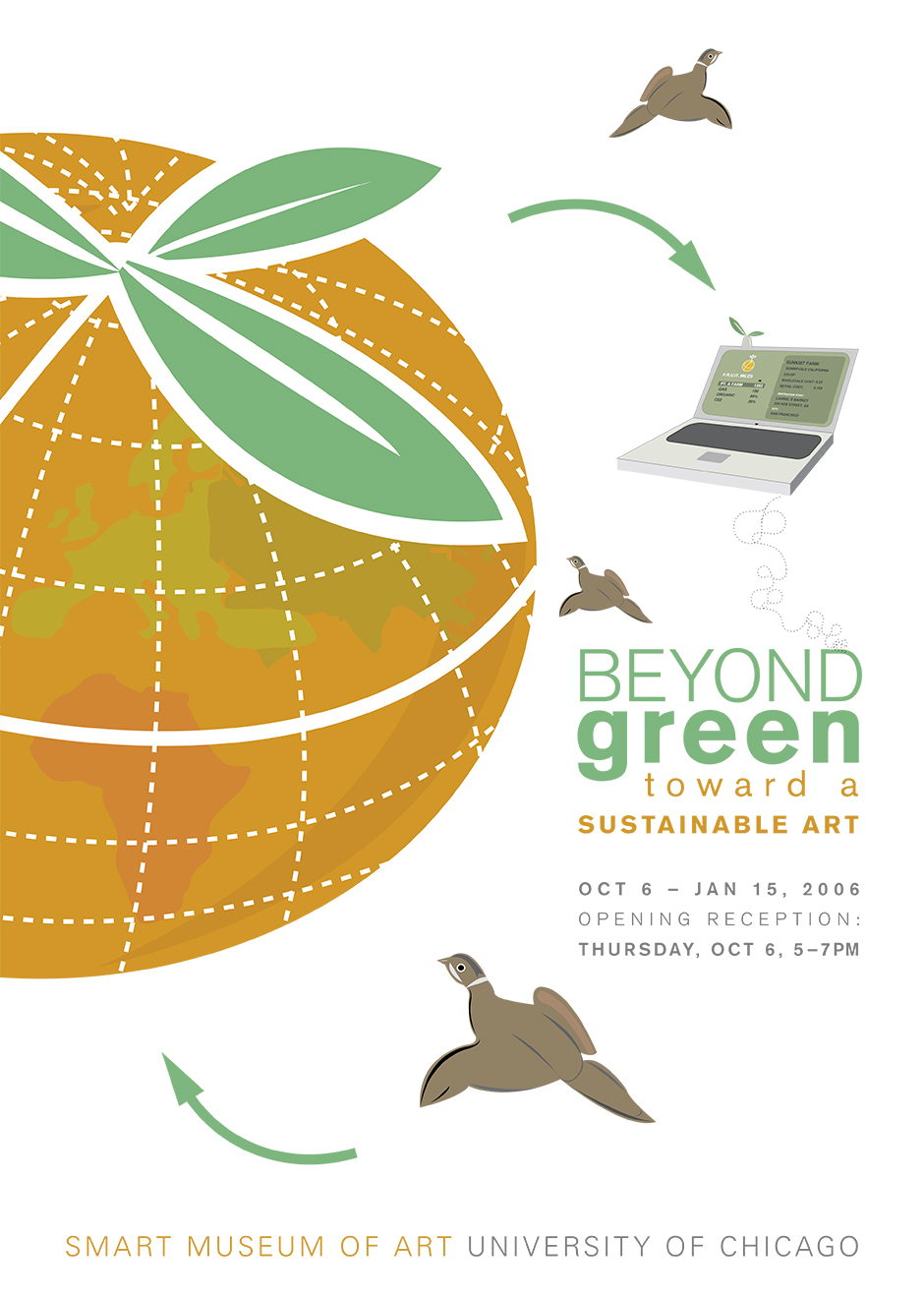
Beyond Green Catalogue
PRIMARY PLUS
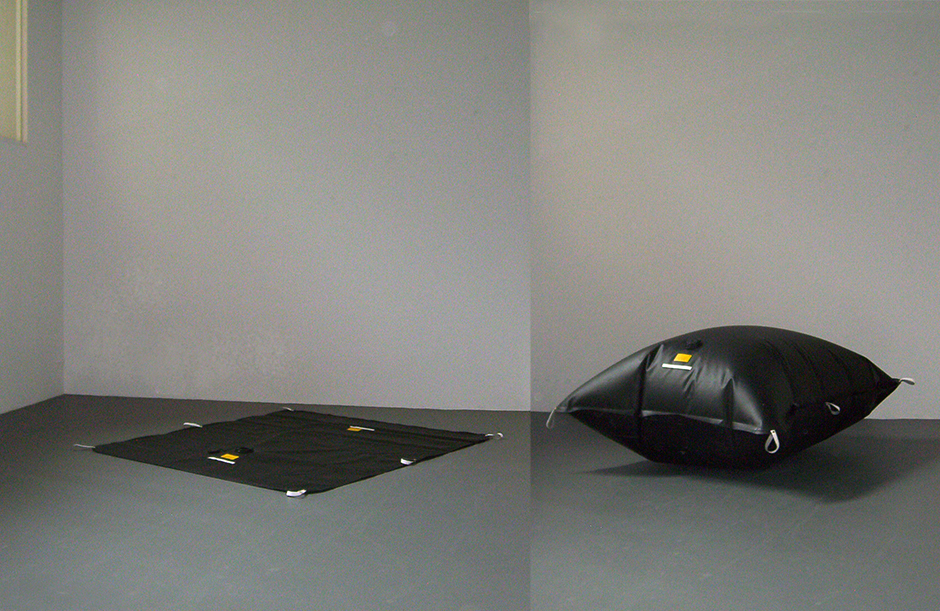
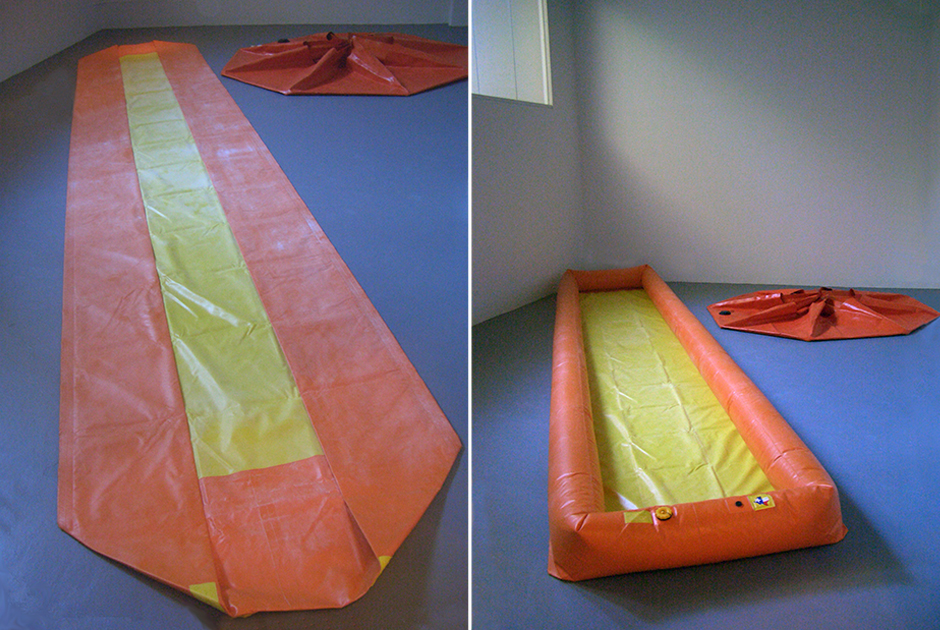
Unknown to the average citizen, a wide range of monumental, collapsible, industrial objects are in worldwide use.
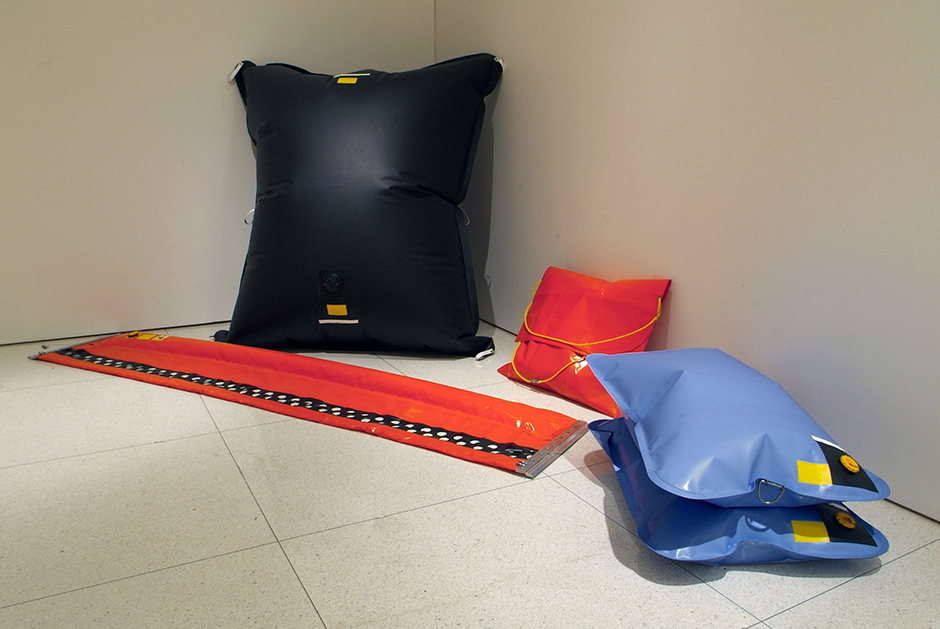
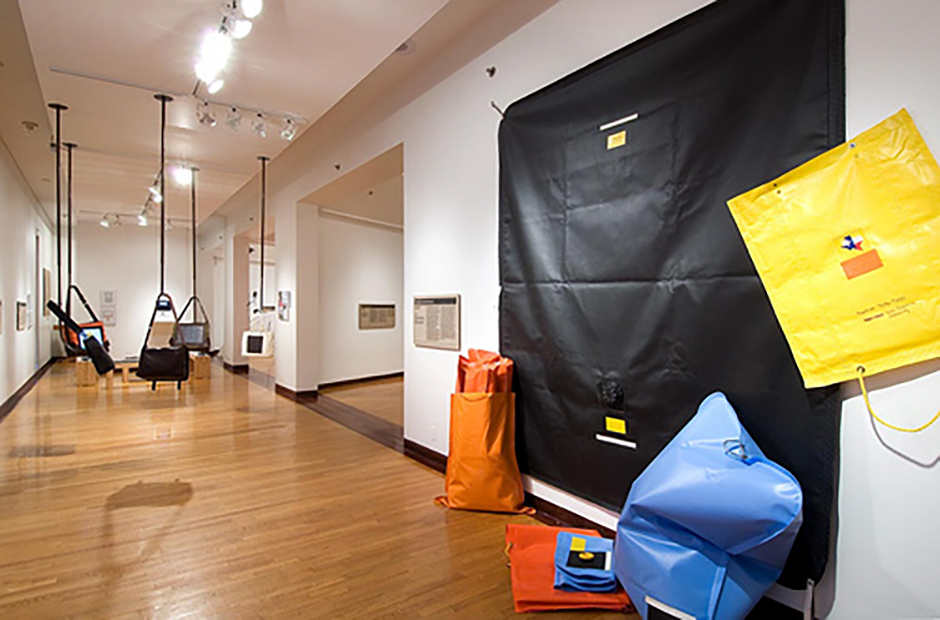
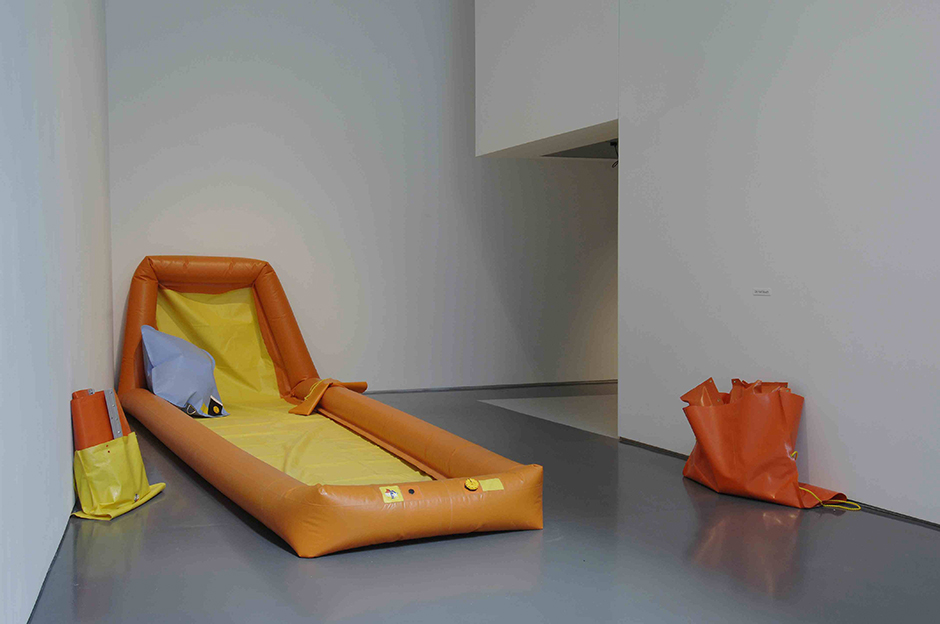
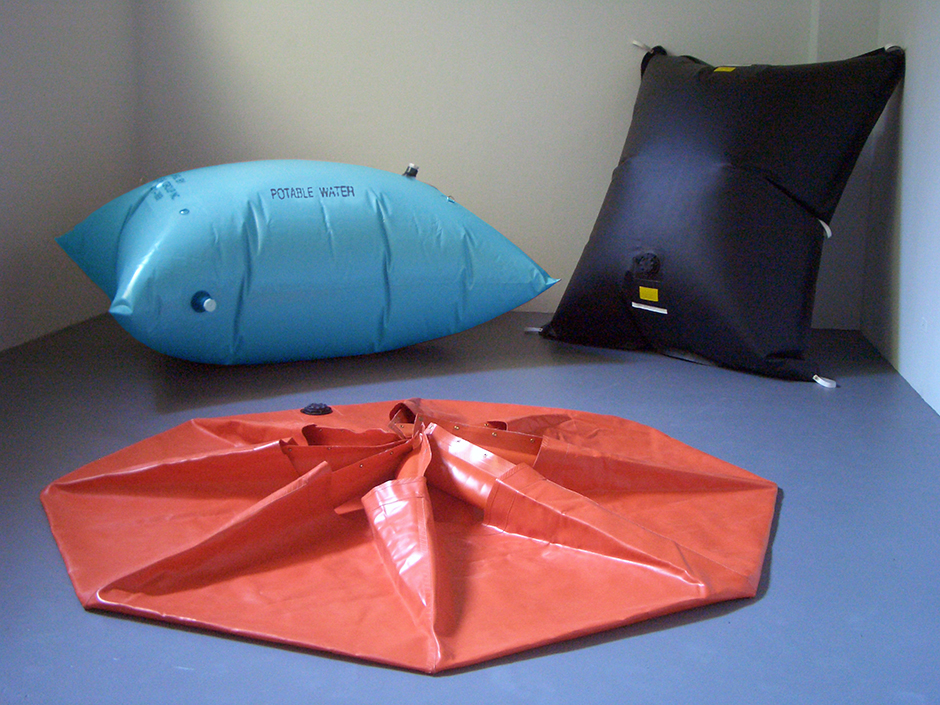
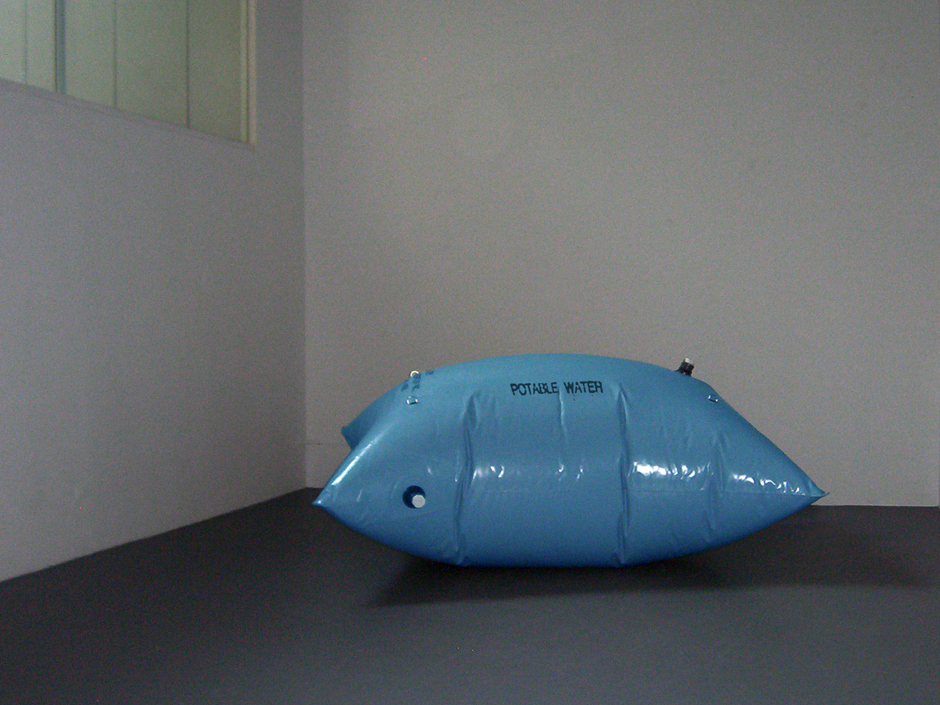
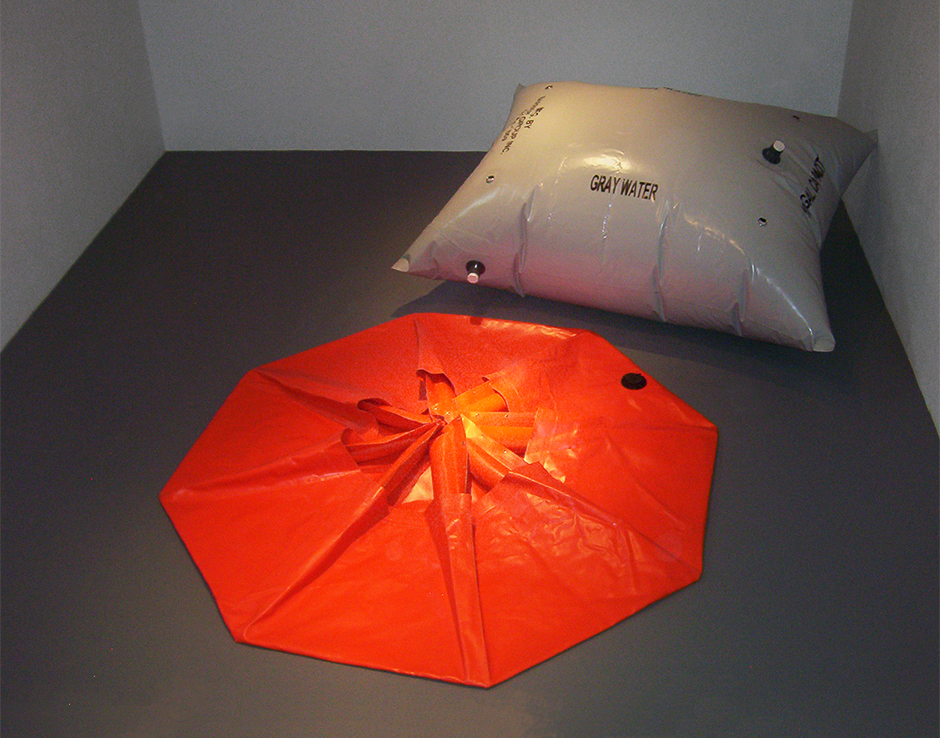
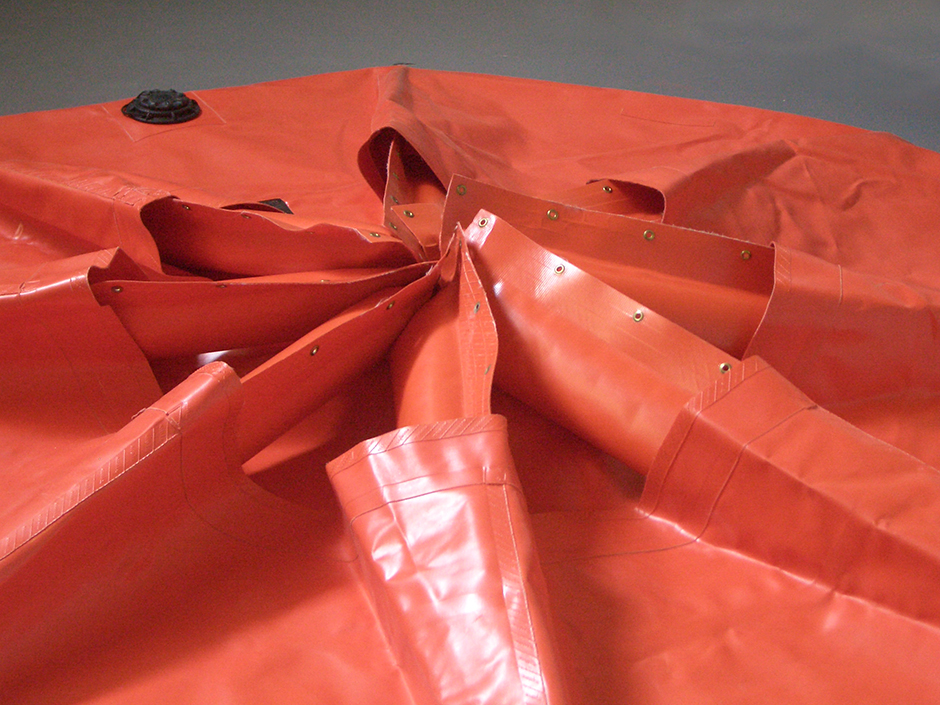
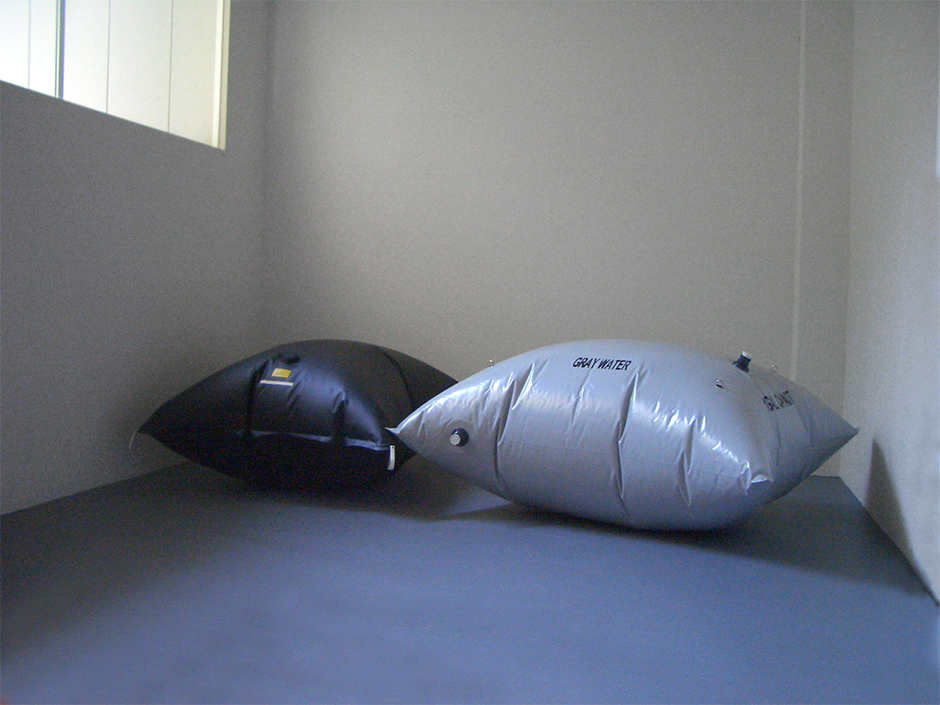
Embodiments of a new global emergency and disaster response culture for temporary off-site storage of liquids including water, these objects mimick the Primary Structures of Minimalism. The presentation of these sculptural objects in a gallery context opens a dialogue about the scale and complexity of global water management practices through one of the most iconic languages of contemporary art.
These sculptural objects open a dialogue about the scale and complexity of global water management practices.
These brightly colored geometric forms are used by military, corporate, survivalist, and humanitarian organizations alike, for temporary off-site storage of numerous liquids including water, as well as for spill containment and fire fighting. Color coded for the end-user, these products are typically blue or white for potable water, grey for grey water, black for non-potable water or fuel, tan or khaki for jet fuel and military applications, yellow for high visibility, and orange, the most inexpensive and therefore ubiquitous color, is used anywhere the contents are un-important or disposable.
Together these products form an industrial taxonomy of the extreme.
How do we evaluate the historicized aesthetic response to these sculptural forms in light of their true identity and purpose? Are these prototypes or “primary structures?” Is this mimicry or mockery? Both mischievous and didactic, these impressive pneumatic forms are “filled” with environmental techno-industrial content, bridging sculpture, architecture, and environmental design.
Readymades, these plastic(ized) structures are quintessential Minimalist objects.
Readymades, these plastic(ized) structures are quintessential Minimalist objects: Here we see Minimalism’s industrial metaphor—its conviction in the well-built object, its display of rational tectonics and material strength, extreme economy of means, and reduction to the essentials of geometric form and color. Variably filled with water or air, these balloon-like forms also reference permeable, liminal, spaces and organic bodies. The humor and levity of these forms and their cheerful colors, barely hint at the function of these objects, that they concern our bodies beyond morphology.