DATE
1995-1996
LOCATION
Laumeier Sculpture Park
St. Louis, Missouri
COMMISSION
Permanent Collection
Beej Nierengarten-Smith
Director + Chief Curator
ADDITIONAL INFORMATION
PLANT LIST
SCULPTURE
Site; Laumeier Sculpture Park
Jan Garden Castro, 1996
CATALOGUE ESSAY
Another Beauty
Mary Jane Jacob, 2001
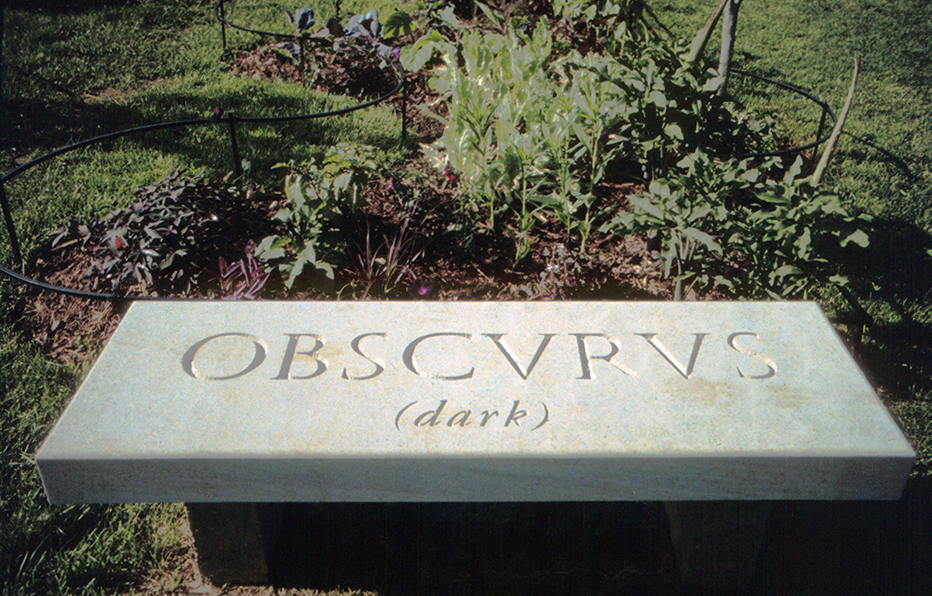
HORTUS OBSCURUS (the dark garden)
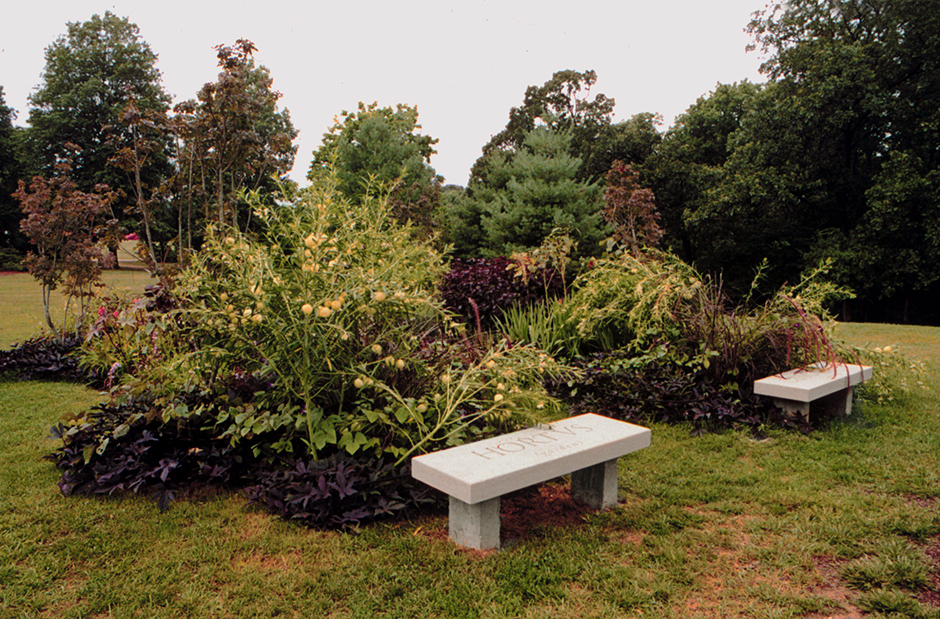
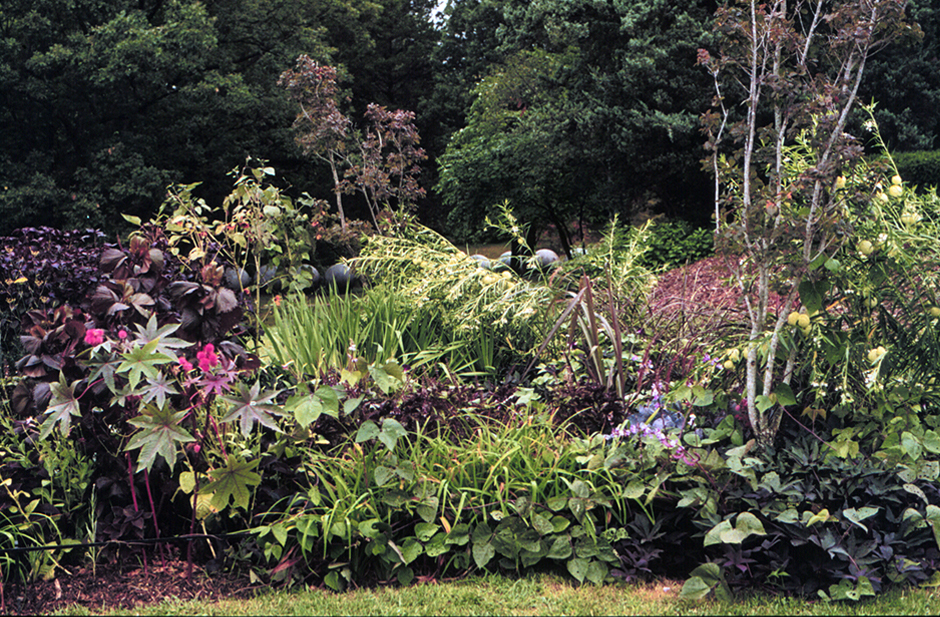
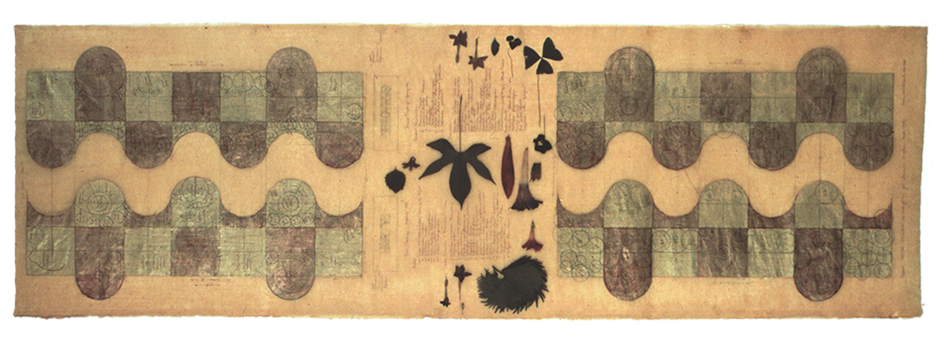
Botanically, The Dark Garden is an encyclopedic collection of the darkest varieties of many well known plants and some lesser known varieties. Based at first glance on exoticism, it is meant to be a botanical extravaganza paralleling the Alba gardens (white gardens) of garden history.
While the primary idea of the garden is visual and botanical the subtext is ecological.
In Western terms, this brings metaphoric associations with the sinister, the funereal, and the evil. However the living garden is vital, thriving, varied and consequently confounds simplistic notions of good and evil, nature and culture. It is further intended to be a surprising, enlightening, enticing and ultimately didactic display of a very atypical view of nature, too often automatically associated with "greenness" not "darkness".
Whitehead’s exploration of gardens find their meaning within a greater cosmology that brings about an intersection of art, landscape architecture, science, history, and poetry; as an ecological “system” between nature and culture. –M.J.Jacob
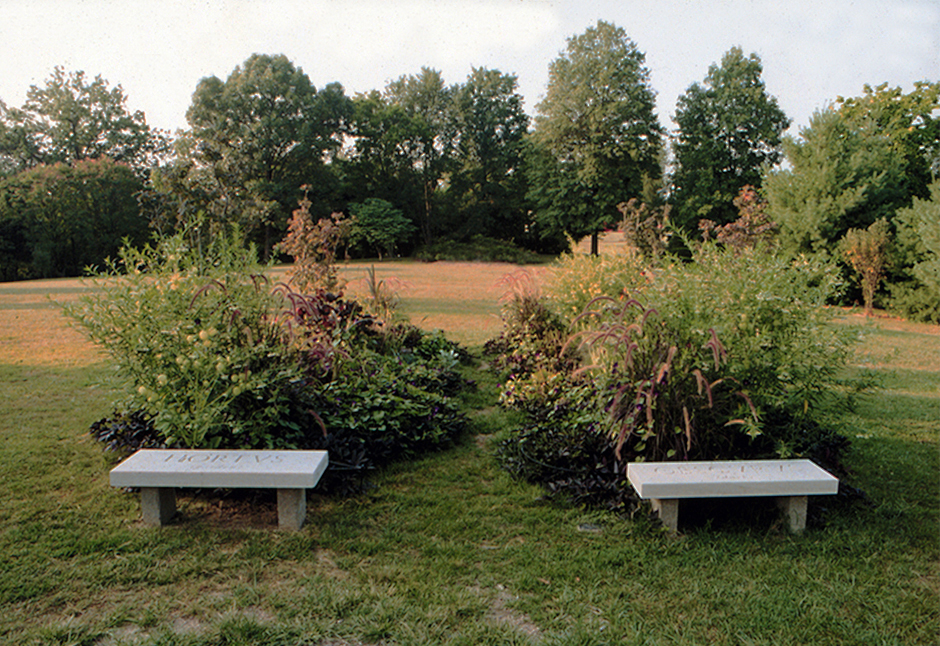
The layout of the garden is essentially baroque, using the interrelation of concentric and eccentric curves to create two serpentine borders. This form was of interest to Whitehead in general, but is also site-specific. Whitehead was delighted to find a formal, symmetrical (classical) garden behind the museum, followed by a baroque serpentine staircase. The center path of the garden (two borders) is a continuation of the baroque and classical elements already present. It also echoes other garden forms such as the representation of water in raked dry gravel gardens in Japan. Originally commissioned as a temporary project, The Dark Garden was subsequently commissioned as a gift by the Laumeier Docents as a permanent work for the Laumeier collection. The smaller garden maintains the original stylist references and a subset of plant species.
The garden is contrived and mannered. It hints that the American notion of "Nature" is a myth based on an idea that nature is separate from ourselves, untouched and exists without our caretaking or maintenance. While the primary idea of the garden is visual and botanical the subtext is ecological. It is a call for greater awareness of the botanical (ecological) world (recovering lost knowledge), and our ultimate complicity in the future.
It is here, in exploring the real but often hidden and obscured relations among things, that Frances Whitehead creates an art of another kind of beauty.
Finally, the name of the garden, Hortus Obscurus, was chosen from several Latin words that mean dark because it operates as a cognate in English. It implies "from obscurity" or "obscured" as well as literally "dark" or "in shadow". The Latin title not only echoes the Latin names of plants (forgotten to all but the greatest enthusiasts) but also hints at the hidden cultural meanings laced and woven into language itself.